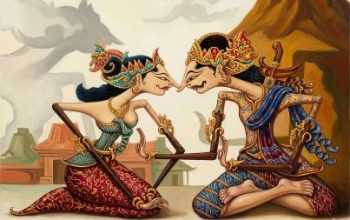

Yogyakarta, Voicejogja.com – In the celestial realm of the gods, a great threat once loomed in the form of a giant named Niwatakawaca. His power terrified even the gods, and their only hope rested upon a single mortal warrior: Arjuna.
However, before he was entrusted to save the heavens, Arjuna had to endure a grueling trial of the soul.

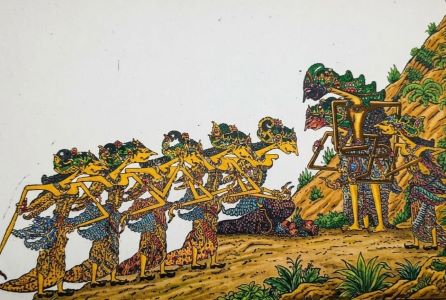
While meditating on the slopes of Mount Indrakila, Lord Indra sent seven heavenly nymphs (Bidadari) to tempt Arjuna with every conceivable charm. This test was not merely about worldly temptation, but a profound trial of his inner steadfastness.
Arjuna remained unmoved. He sought not worldly pleasure, but the strength to uphold Truth (Dharma).
This spiritual journey was later immortalized in the Kakawin Arjuna Wiwaha, a masterpiece of Old Javanese literature written by Empu Kanwa during the golden age of the Medang Kingdom under King Airlangga.
Poetic Verses of the Inner Journey
One of the verses in this Kakawin describes the human spiritual journey with hauntingly poetic language:
“Ambĕk sang paramārtha paṇḍita huwus limpad sakêng śūnyatā…”
This verse depicts the heart of a seeker who has transcended worldly temptations. He is not driven by sensory desires but by an awareness born from the experience of silence. In the story of Arjuna Wiwaha, this is the spiritual path Arjuna walked during his penance.
The Trial of the Seven Nymphs
As Arjuna meditated to seek a divine weapon, the gods wanted to ensure the purity of his heart. Lord Indra sent seven nymphs, including the legendary Supraba and Tilottama, to seduce him.
They tried to allure the warrior with beauty and grace. Yet, Arjuna remained firm. For him, the purpose of his penance was not personal glory, but the power to help his brothers, the Pandavas, in their struggle.
The Encounter with Shiva
Arjuna’s trial continued when the God Shiva descended to earth disguised as a hunter named Kirata. After a brief conflict over a hunted boar, Arjuna realized that the hunter was Shiva himself.
Impressed by Arjuna’s devotion, Shiva granted him the Pasupati, a divine bow that would become the key to defeating Niwatakawaca.
Conquering the Giant
Tasked by the gods, Arjuna collaborated with the nymph Supraba to take down Niwatakawaca. Supraba feigned love for the giant to uncover his weakness. In his arrogance, Niwatakawaca revealed his secret: his vulnerable point was the tip of his tongue.
Arjuna provoked the giant into a fit of laughter. As his mouth opened wide, Arjuna released the Pasupati arrow directly into the giant’s tongue, ending his reign of terror.
An Allegory of Leadership
The Arjuna Wiwaha is more than a heroic tale. Empu Kanwa composed this story during the reign of King Airlangga, a time when the kingdom was rebuilding after a great crisis known as Mahapralaya.
Thus, the figure of Arjuna is often understood as a symbol of a leader who must conquer himself before he can guard the world.
Lessons for Modern Life
Beyond the war against giants, this epic conveys a message of self-control. The temptation of the seven nymphs symbolizes the five senses and the mind that must be mastered. The Pasupati arrow represents the focus and divine grace that come when the ego has been silenced.
In a modern world filled with material and power temptations, this Kakawin reminds us that true victory is not just conquering an enemy outside, but conquering the giant within ourselves.(Oi)