
Yogyakarta, Voicejogja.com – In many corners of Yogyakarta, stories of Weton (Javanese birth-charts) are woven into family conversations and life reflections. More than just a birth calculation, it is a cultural lens through which the community views the journey of fate and fortune.
In Javanese philosophy, wealth achieved in old age is considered the most valuable, born from long-term patience and a disciplined life maintained since youth.

Prosperity That Arrives in the Twilight Years
In the ancient manuscript Primbon Betaljemur Adammakna, there is a concept known as “Tiba Rejeki”, a state of prosperity that matures between the ages of 40 and 60 and beyond. This concept illustrates that success does not always arrive in one’s youth.
There is a phase where life reaches its pinnacle only after an individual has navigated various trials. For the people of Yogyakarta, this view is deeply resonant: life is not measured by speed, but by the right timing and spiritual readiness.
Wetons Believed to Strengthen with Age
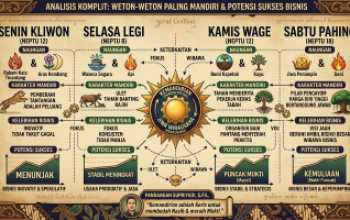
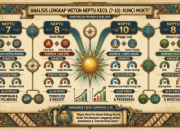
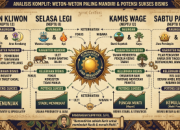
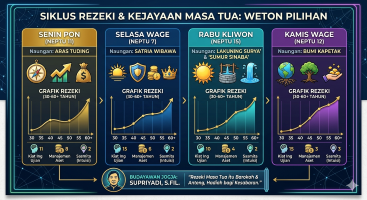
Several Wetons are said to have a tendency for increasing fortune as they grow older. Senin Pon, for instance, is known for experiencing ebbs and flows in youth before reaching stability in maturity. Selasa Wage is often seen as a symbol of endurance, enduring hardships early on before enjoying the fruits of labor later in life.
Rabu Kliwon stands out for its management capabilities, while Kamis Wage is known as a diligent worker who harvests results from long-term consistency. For the residents of Yogyakarta, this list is not merely a prediction but a reflection of life values: patience, perseverance, and the refusal to be rushed.
Traits Grown from a Long Process
In the Serat Centhini manuscript, those who achieve stability in old age are described as possessing great resilience since their youth. They are accustomed to a frugal lifestyle, capable of managing resources, and remain steadfast in the face of adversity.
Over time, their intuition sharpens; decisions are no longer made purely through logic but are the result of experience and spiritual maturity. These values remain highly relevant in modern Yogyakarta, where economic challenges demand long-term resilience.
The Meaning of “Ngundhuh Wohing Pakarti”
Yogyakarta cultural expert, Supriyadi, S.Fil., views late-life success as a form of life balance.
“In Javanese cosmology, wealth in old age is called Barokah and Anteng (tranquil and blessed prosperity),” he explains.
He further clarifies that success in the twilight years is not just about material gain, but the result of a long process of self-control and life management.
“Old age filled with abundance is a gift for those who did not ‘nggege mangsa’ (rush the seasons) in their youth. They patiently sowed the seeds, and thus they have the right to reap the harvest,” he adds.
This reinforces the philosophy of “Ngundhuh Wohing Pakarti”, reaping what one has sown throughout their life.
Closing
Stories of Weton and late-life prosperity are not just cultural heritage; they are the way the people of Yogyakarta understand the meaning of a complete life.
There, success is measured not by how fast it is achieved, but by how deep its meaning is when it finally arrives. And perhaps, therein lies the true tranquility.(Oi)