
Yogyakarta, Voicejogja.com – Amidst the common belief that greatness is determined by large numbers, Javanese philosophy whispers a different story. Neptu Kecil (the Small Numerology), often underestimated, silently guards a path to success that is far more enduring.
For the people of Yogyakarta, where the Weton (birth-chart) tradition remains a way of life, this understanding is more than just a calculation—it is a mirror of resilience, teaching how limitations can be refined into profound strengths.

Behind Small Numbers, Lies Great Perseverance
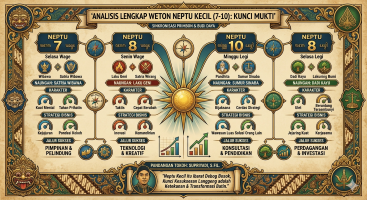
In ancient manuscripts such as Primbon Betaljemur Adammakna and Serat Centhini, a small neptu (typically ranging from 7 to 10) is never framed as a weakness. On the contrary, it serves as the foundation for a success that is not rushed, but deeply rooted.
Success for those with a small neptu is not about a sudden burst of luck, but a meticulous, long-term process. Perseverance, the precision in reading situations, and the agility to adapt are the keys they constantly sharpen.
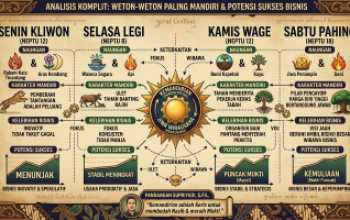
Certain wetons are even said to possess a powerful path to “Mukti” (prosperity). Selasa Wage (Neptu 7), for instance, is known for achieving high status through endurance and humility.
Meanwhile, Minggu Legi (Neptu 10) thrives through wisdom, often becoming a source of solutions for those around them.
Intuition, Grit, and the Disciplined Life
Those born with a small neptu are described as having sharp inner sensitivity. They do not rely on brute force; instead, they use a keen intuition to spot opportunities that others often overlook.
Furthermore, there is a consistent “Laku Hidup” (spiritual discipline). They work harder, observe more closely, and wait more patiently. In the Javanese tradition, the trait of “Titen” (the ability to observe details meticulously) becomes their most vital asset in the journey of life.
While the world chases instant results, the small neptu teaches a different rhythm: slow, but absolute.
The “Debog Bosok” Philosophy from Yogyakarta
Yogyakarta cultural expert, Supriyadi, S.Fil., describes this phenomenon as “Debog Bosok Panitisan Dewa.” It is a term for something that appears weak or useless but is actually a source of divine strength.
“A decaying banana stem (debog bosok) is often discarded, yet it is the best natural fertilizer. Similarly, those with a small neptu are forged from the very beginning,” he explains.
He adds that success born from a small neptu tends to be more sustainable because it originates from a matured internal process, it’s not about dominance, but the mastery of self.
From “Bumi Kapetak” to Abundance
In the Pancasuda calculation, a small neptu often falls under the position of Bumi Kapetak, The Hidden Earth. In Javanese interpretation, this is not an end, but a beginning.
The “hidden earth” is believed to store unseen potential. It demands hard work, patience, and steadfastness before it finally reveals its hidden treasures. Therefore, Javanese tradition does not emphasize grand rituals for the small neptu. Instead, it emphasizes honesty, sincerity, and the habit of silent giving.
Closing
In an ever-changing era, the philosophy of the small neptu remains profoundly relevant, teaching us that the future is not always determined by what appears grand. It is from the simple, from the often-ignored, that a more lasting and meaningful strength is born.(Oi)