
Yogyakarta, Voicejogja.com – In the living spaces of Javanese tradition that still thrive in Yogyakarta, discussions about High Neptu (High Numerological Value) often emerge as a sign of great inner energy within an individual.
In Javanese Petungan (numerology), these numbers are not merely calculations; they are perceived as vibrations believed to influence one’s life journey, social relationships, and inner resilience.

On the other hand, this understanding leaves room for reflection on how humans face themselves, especially when such immense energy is interpreted not just as a privilege, but as a responsibility that must be maintained through spiritual balance.
High Neptu in Javanese Cosmological Practice
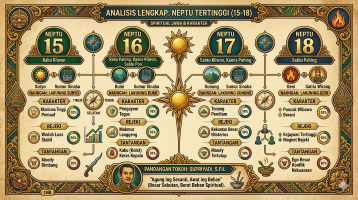
In the Javanese numerological system, Neptu is the sum of the values assigned to the day of birth and the five-day Javanese market cycle (Pasaran). A High Neptu generally falls within the range of 14 to 18, which in tradition is considered the peak of specific energy cycles within a Weton (birth date).
Combinations such as Rabu Kliwon, Kamis Pahing, and Sabtu Pahing are frequently cited in the classical manuscript Primbon Betaljemur Adammakna. These are associated with the energies of Lakuning Geni (The Way of Fire) or Lakuning Suryo (The Way of the Sun), symbols of immense power, dominance, and a strong driving force in life.
Authority, Ambition, and Inner Dynamics
In Javanese cultural views, owners of High Neptu are often associated with a natural authority (Wibawa) that is easily felt in social spaces. This charisma often leads them to be seen as figures with significant influence over their surroundings.
However, behind this lies an inner dynamic that is not always easy to navigate. The vast energy possessed can present challenges such as fluctuating emotions, rigid determination, and the constant need to balance oneself through consistent spiritual practices (Laku).
Cultural Interpretation and the Accompanying Burden
Yogyakarta cultural expert Supriyadi, S.Fil., interprets High Neptu as part of a dialectic between glory and burden.
“In Javanese philosophy, High Neptu is referred to as ‘Agung ing Sesanti, Awat ing Beban’, Great in title, heavy in burden. If the mental state is not prepared, that energy can become a trial for the individual themselves,” he remarked.
This perspective highlights that in Javanese tradition, numbers do not stand as absolute fate, but rather as a reminder of the balance between potential and responsibility.
Sumur Sinaba and the Path of Self-Control
In classical manuscripts such as Serat Centhini, those with great energy are often linked to the position of Sumur Sinaba—a figure who acts as a well of wisdom and a point of reference for others. However, life phases may also lead them into situations of Satria Wirang, where the process of inner maturation becomes a vital part of their journey.
In traditional practice, rituals such as Ruwat Batin (inner cleansing) or Weton fasting are still performed as a form of self-control. This is intended to ensure that the great energy remains in equilibrium, preventing it from becoming a psychological or social burden.
Meaning Rooted in Javanese Life
In the cultural context of Yogyakarta, the understanding of High Neptu demonstrates how the Javanese people read life through symbols, values, and inner harmony. It is not merely a number, but a mirror for understanding the self, social relations, and responsibility toward the broader spectrum of life.(Oi)